1. What Is Protein Used For?
Protein helps build and maintain tissues such as muscles and skin, and serves as a building block for enzymes and other substances in the body. Because the body cannot produce some of the amino acids that make up protein, they must be obtained through food. However, eating more protein does not automatically increase muscle mass; your overall diet and exercise routine matter too.
2. Basic Calculation Method
For a healthy average adult, 0.8 g of protein per kilogram of body weight per day can be used as a starting point for estimating the recommended amount. For someone weighing 70 kg, that is about 56 g. Athletes may be advised to consume 1.2–2.0 g/kg depending on their type and intensity of training, but this amount is not necessary for everyone. The needs of older adults, pregnant or breastfeeding people, and those trying to lose weight may vary depending on their condition.
3. Check the Actual Amount Using Food Labels
The moisture content and cooking state vary from food to food, so simply memorizing the protein amount per 100 g can lead to significant errors. One egg usually contains about 6 g of protein, but the amount varies by size. Check the nutrition information on the package or a reputable food database based on the actual portions of meat, fish, tofu, milk, and legumes you eat. Do not compare the per-100-g values of dried beans directly with those of boiled beans.
4. When Should You Eat Protein?
A practical approach is to meet your total daily amount first and spread it out instead of eating it all in one or two meals. For people who exercise, consuming high-quality protein at 3- to 5-hour intervals, including within 2 hours after exercise, is one suggested approach. However, there is no “golden window” where missing the first 30 minutes after exercise makes the benefits disappear. Simply eat consistently according to your meal schedule.
5. What to Check Before Eating More
Amounts that apply to healthy people may not be appropriate for those with kidney or liver disease. If you have one of these conditions or have been advised to restrict protein, do not change your diet based on the calculator result. Increasing only protein-rich foods while excessively cutting vegetables, whole grains, or fats can upset the balance of your overall diet.
6. Start With Food
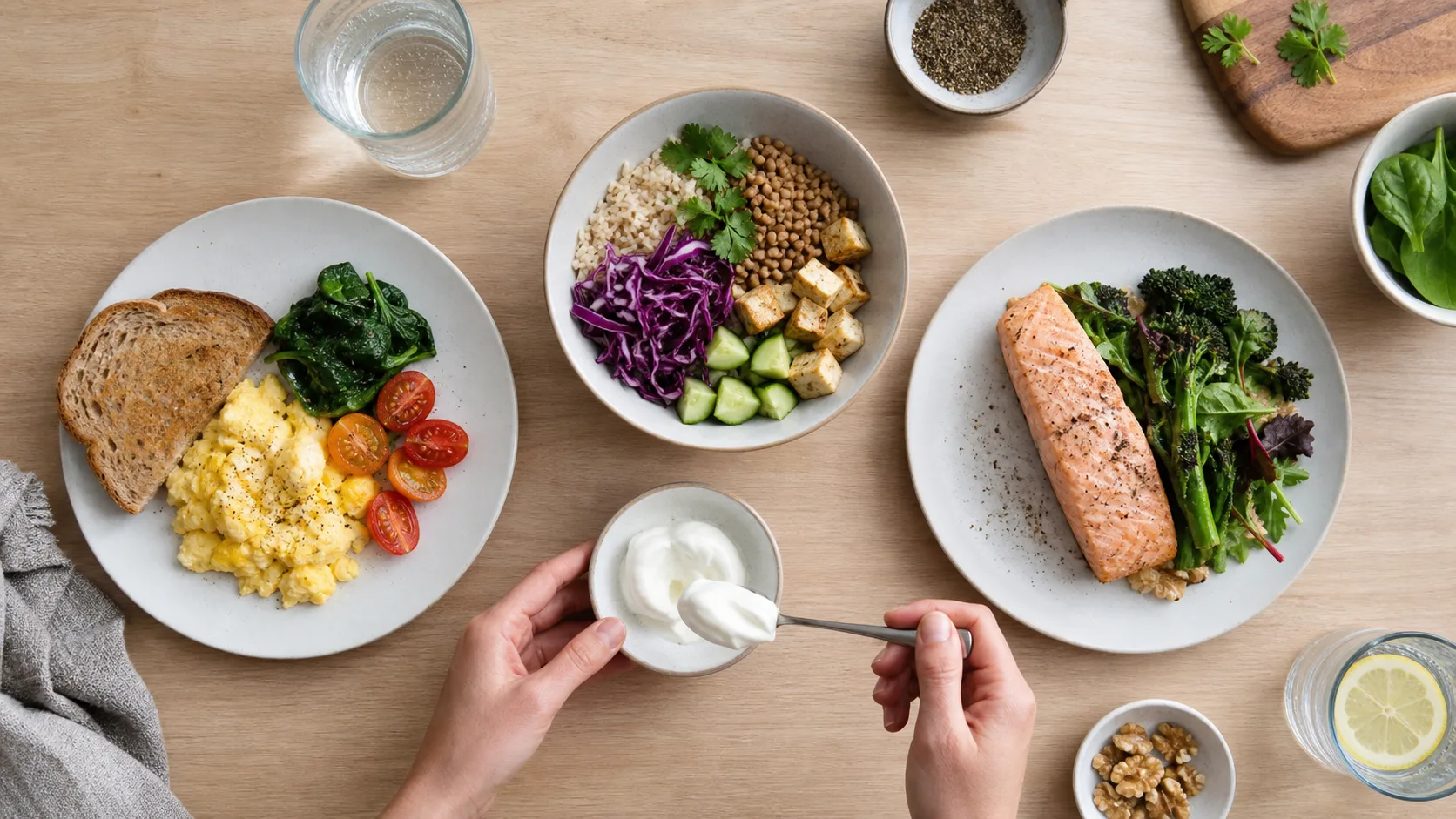
Add one convenient protein-rich food, such as eggs, fish, lean meat, tofu, beans, or dairy, to each meal and keep a record for about a week. Supplements may be chosen for convenience when it is difficult to meet your needs through food and your required amount has been confirmed. Serving sizes and added ingredients vary by product, so check the label and do not consider supplements a replacement for meals.